
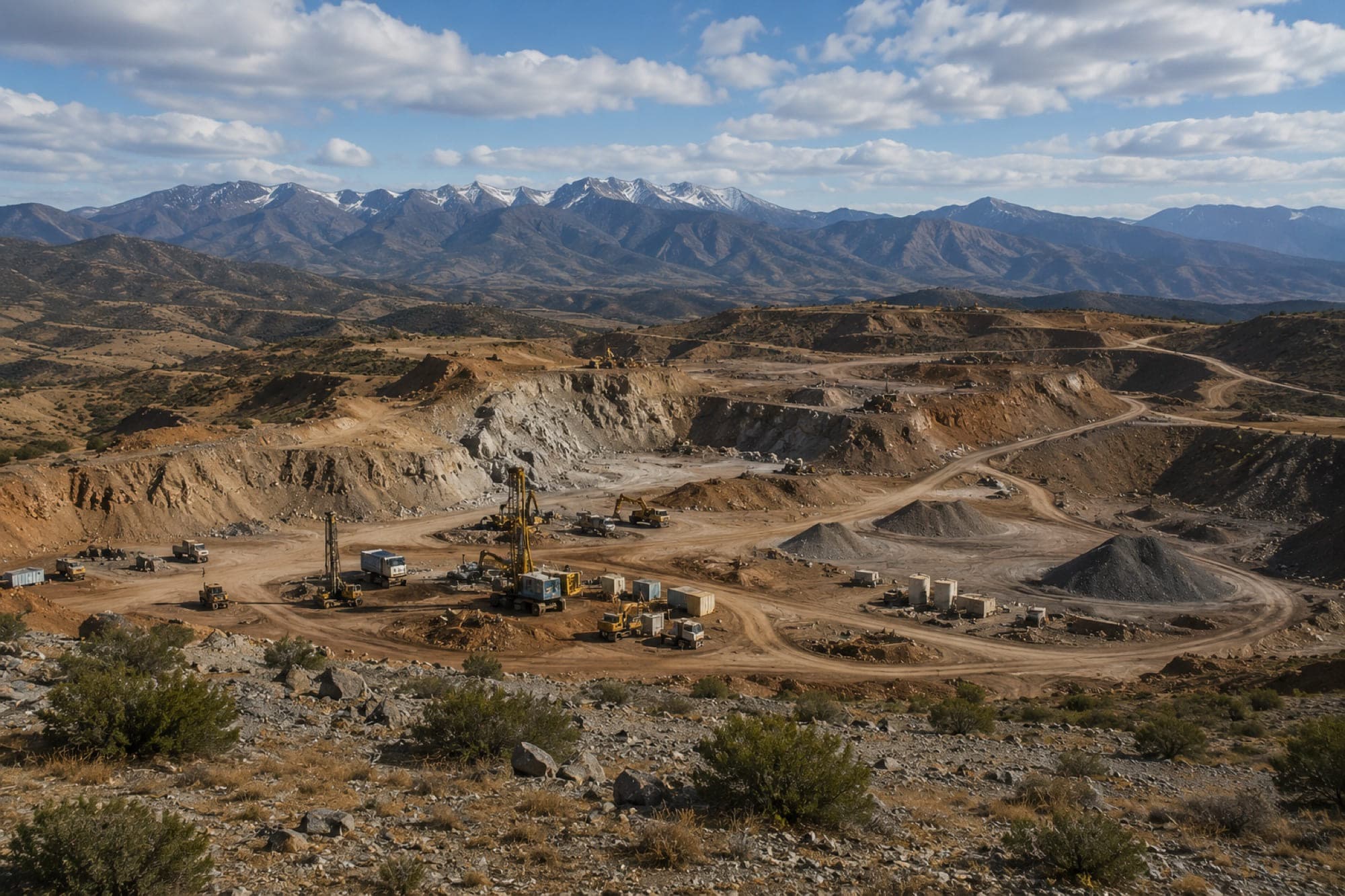
Handheld XRF, LIBS, Vis-NIR & Portable Benchtop Analyzers for Geochemistry & Mining
Analyze any mineral, any element, any place on the planet. SciAps builds the industry's most complete family of portable XRF, LIBS, Vis-NIR, and benchtop analyzers for geologists and exploration teams – for research, exploration, grade control, block modeling, and process optimization. From lithium in rocks and brines to the full suite of light and heavy rare earth elements (REEs), this page covers every SciAps analyzer used in geochemistry and mining, how each applies in the field, and how to combine them.
Why Exploration & Mining Teams Choose SciAps
No single technique measures every element that matters in exploration. SciAps is the only company offering a fully integrated portfolio spanning elemental and mineralogical analysis, so teams move seamlessly from element to mineral to decision in the field:
Handheld XRF
Fast, high-volume elemental analysis for core, chips, and soils; light REEs and pathfinders at up to 55 kV.
See detailsHandheld LIBS
Measures light elements XRF can't (Li, Be, B, C, F, Na), enables in-field lithium and soil-carbon analysis, and supports micro-analysis of veins and inclusions.
See detailsVis-NIR Spectroscopy
Identifies alteration and pathfinder minerals to vector toward ore bodies.
See detailsPortable Benchtop
The PowerHouse X reaches 80 kV for heavy REEs no handheld can touch.
See detailsHandheld XRF Analyzers for Geochemistry
The 55 kV Flagship for Rare Earth Elements
The world's only handheld XRF with a 55 kV tube, the X-555 is the superior option for REE analysis. The higher voltage effectively analyzes all light REEs (La, Ce, Pr, Nd, Sm) plus heavy REEs europium and gadolinium, and an additional beam optimizes yttrium – a key pathfinder for heavy REEs like Dy, Tm, and Yb. It also reads 30+ light, transition, and heavy metals of interest to miners. Paired with detectORE™, the X-555 reaches ~40 ppb gold and ~0.4 ppm silver in the field, turning months of wait into potentially same-day answers.
Best-in-Class Light-Element Performance
Built on a 50 kV, 200 µA, 5 W tube, the X-550 Geochem delivers ultra-low detection limits on light elements (Si, P, S, Mg, Al), with an optional 50 kV Mining calibration for even better LODs on heavier elements like REEs and gold pathfinders (Ag, Sb). An external cooling fan sustains high duty cycles in extreme heat, and a large-area SDD with tight X-ray geometry yields fast, precise results on the hardest elements for handheld XRF.
High-Value Mining Suite
The X-505 measures battery metals (Mn, Co, Ni) plus a general mining suite of 30+ additional elements at a lower price – a strong all-rounder for grade control and exploration where 55 kV REE performance isn't required.
Handheld LIBS Analyzers for Geochemistry
SciAps Z-Series LIBS measures the low-atomic-number elements X-ray can't (Li, Be, B, C, F, Na) plus transition and heavy metals, with optional argon purge for better detection limits and a 3D internal stage that rasters the laser for surgical analysis of inclusions and veins.
Flagship Full-Range Geochemistry (H to U)
The three-spectrometer Z-903 spans 190–950 nm to measure every element from hydrogen to uranium – including beryllium, boron, carbon, fluorine, and sodium – for teams that require full elemental coverage. It's also the analyzer behind SciAps' in-field soil-organic-carbon and lithium-brine methods. On board, the Geochem App delivers quantitative bulk analysis with metadata capture and element-to-oxide conversion, while the Geochem Pro App adds ground-breaking in-field micro-analysis – map elemental distribution within minerals, veins, and inclusions, and export element maps and spectra into third-party software (ioGAS).
World's Only Handheld Lithium Analyzer
The Z-901 Li is the only handheld analyzer that measures lithium in rocks, ores, powders, and brines for instant, in-field results, a breakthrough for battery-metal and pegmatite exploration.
Extended-Range Brine Analysis
When brine work requires B, Na, Mg, Ca, K, and other elements alongside lithium, the Z-902 extends the element range for more complete battery-metal and brine characterization.
In-Field Brine Analysis from 1–2 mL
Paired with the Z-903 LIBS, the Z-9 Liquidator analyzes brines in the field or lab from just 1–2 mL of sample with no dilution – atomizing the liquid into a fine mist the Z-903 reads in seconds. It simultaneously measures Li plus B, Na, Mg, K, Ca, and more, replacing lab methods that take days, weeks, or months.
Vis-NIR Analyzers for Mineral Identification
Where XRF and LIBS measure elements, Vis-NIR identifies minerals – the alteration and pathfinder minerals that vector toward ore.
Handheld Vis-NIR for Exploration
A game-changing portable Vis-NIR analyzer for mineral reconnaissance and exploration, delivering real-time mineralogical analysis in the most remote locations – for reconnaissance, core logging, and mapping.
FieldSpec, TerraSpec & LabSpec
The ASD FieldSpec is SciAps' most advanced spectroradiometer, built for maximum sensitivity in outdoor and remote-sensing environments (satellite ground-truthing, hyperspectral support) with a superior signal-to-noise ratio and factory-installed fiber. TerraSpec (rugged mining/core work) and LabSpec (controlled lab settings) round out the line.
Portable Benchtop XRF for Heavy REEs
80 kV Benchtop for Heavy Rare Earths
The PowerHouse X uses an 80 kV miniature X-ray tube to efficiently excite the K-shell lines of both light and heavy REEs – avoiding the spectral overlaps that defeat conventional handhelds and delivering unprecedented detection limits. It measures heavy REEs (Gd, Tb, Dy, Ho, Er, Yb, Lu) and light REEs (La, Ce, Pr, Nd, Sm, Eu), calibrated across 48 elements, all in a battery-powered, field-portable, fully-shielded package.
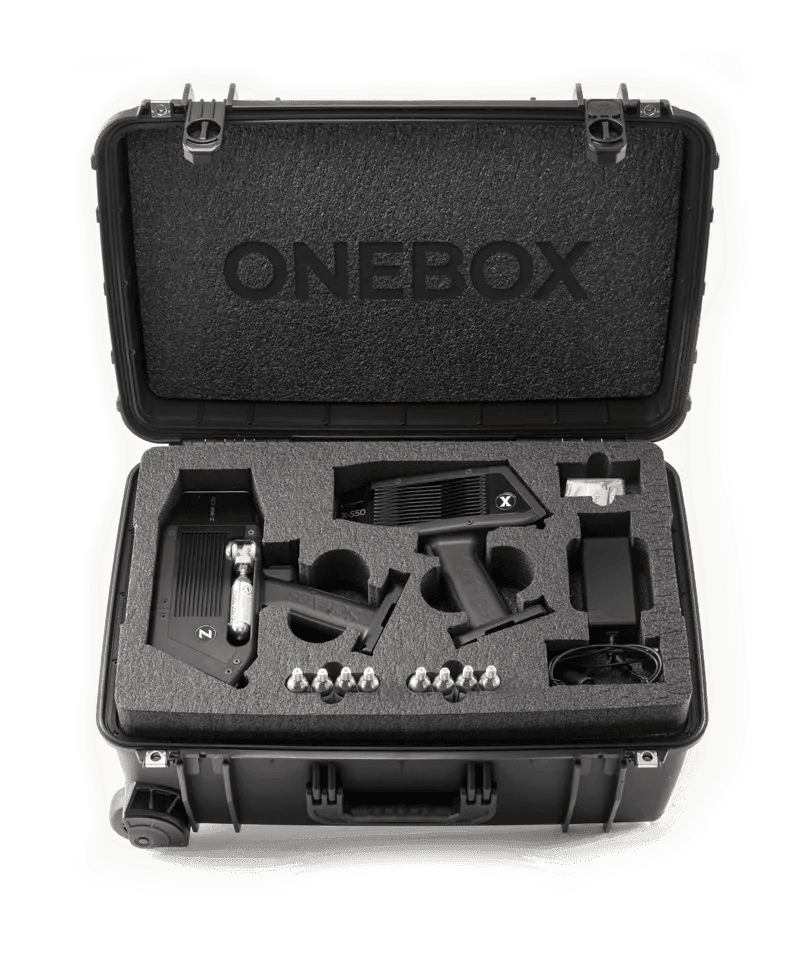
The Geochemistry OneBox:X-555 + Z-903
No single technique measures every element that matters in exploration. A SciAps OneBox pairs an X-Series XRF with a Z-Series LIBS that share batteries, charger, and accessories – elemental coverage from hydrogen to uranium in one case, for grade control, core logging, and soil geochemistry.
- Exploration OneBox: X-555 + Z-903 for the widest coverage – 55 kV REE and pathfinder analysis from the XRF, plus the light elements X-ray can't reach (Li, Be, B, C, F, Na) from the LIBS.
- Lithium & Brine OneBox: X-555 (or X-505 where REE performance isn't required) + Z-901 Lithium for in-field pegmatite and brine work; add the Z-9 Liquidator to run brines from 1–2 mL.
- Grade-Control OneBox: X-505 + Z-903 for day-to-day grade control and core logging at a lower price, keeping full light-element coverage.
Advanced Software: Profile Builder & SciAps Cloud+
SciAps analyzers work as simple point-and-shoot tools or as advanced method-building analyzers. Profile Builder frees you from factory calibrations: tune models to local geochemistry, load or add certified reference materials, and build custom methods for XRF and LIBS.
SciAps Cloud+ takes Vis-NIR beyond simple field measurements, turning every scan into real-time, actionable intelligence. It connects lab-grade calibration, field instruments, and cloud-based insights in one scalable platform – so you can measure more, see more, and make confident decisions faster.
Geochemistry & Mining Resources
Application notes, brochures, and independent studies for Geochemistry & Mining. See everything in the Resource Library.
Application Notes
View all 10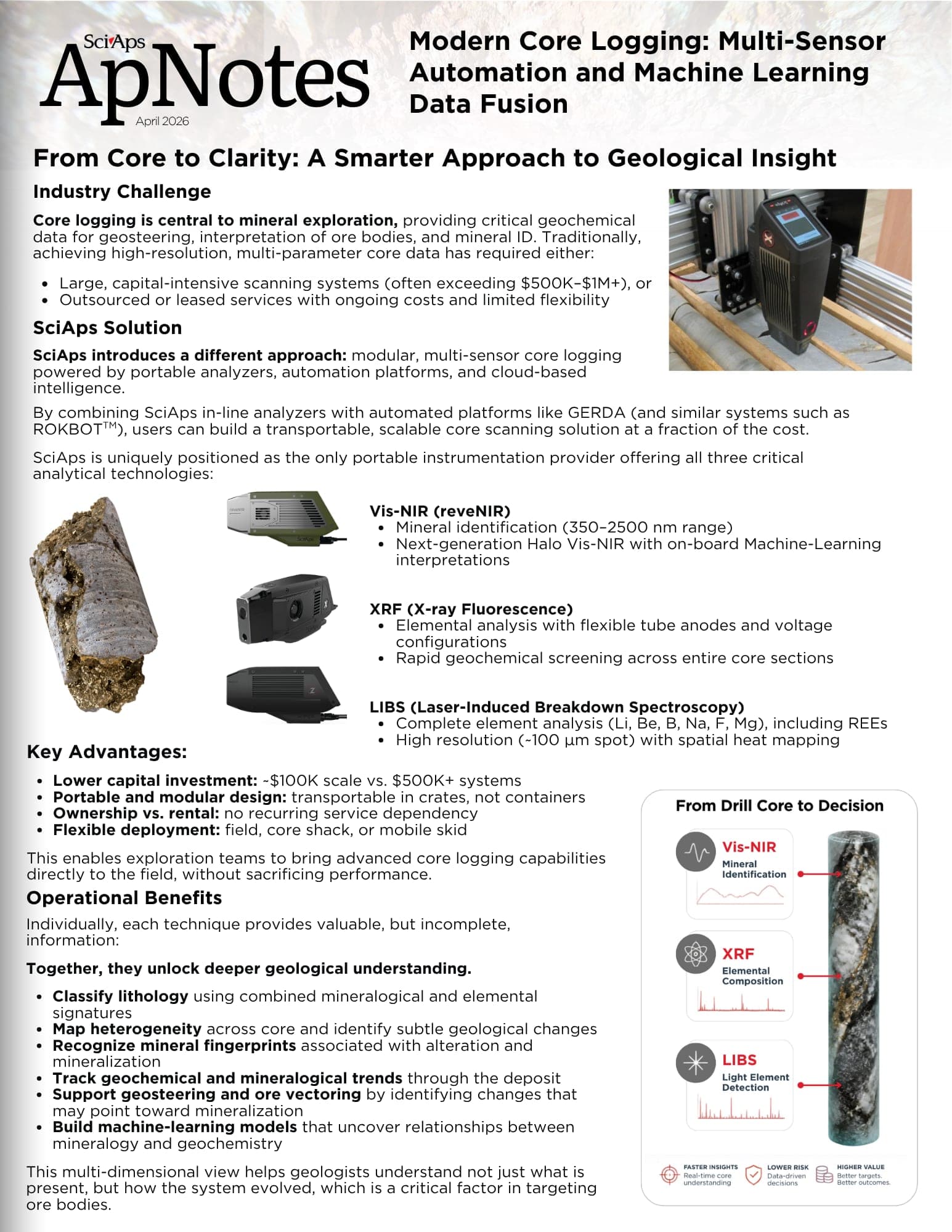
SciAps ApNote Modern Core Logging with Multi-Sensor XRF, LIBS & Vis-NIR
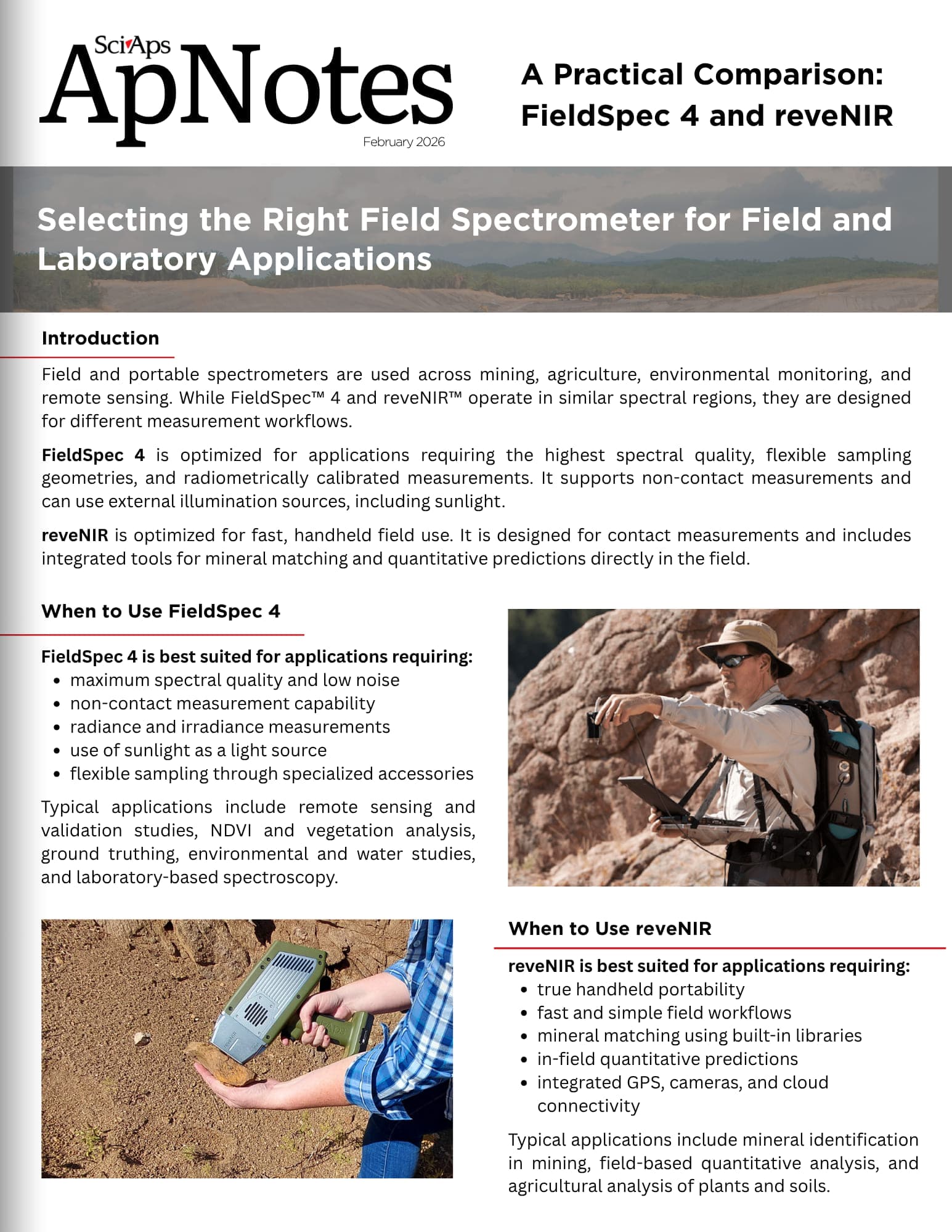
ApNote: Selecting the Right Field Spectrometer for Field and Laboratory Applications
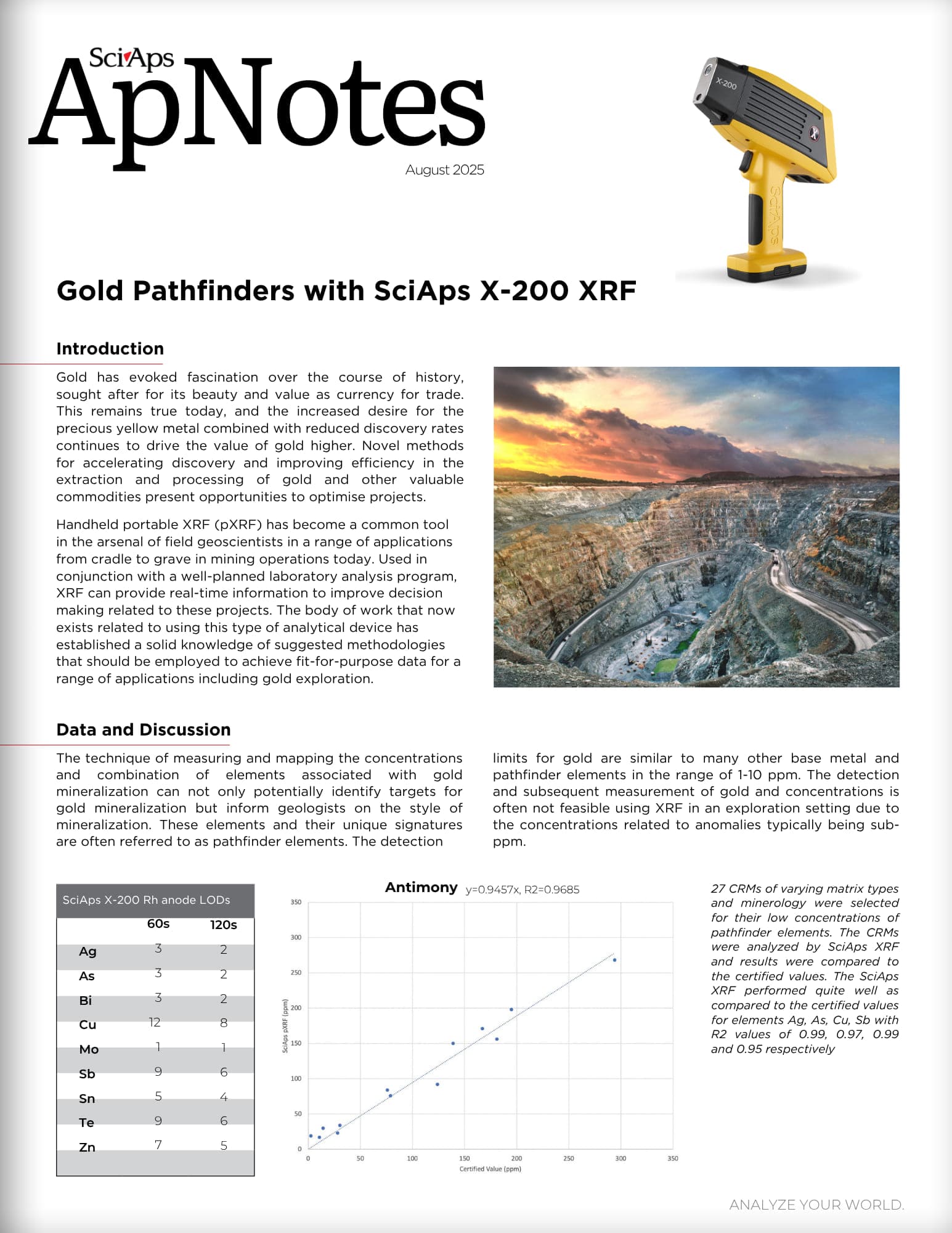
Gold Pathfinders with SciAps XRF
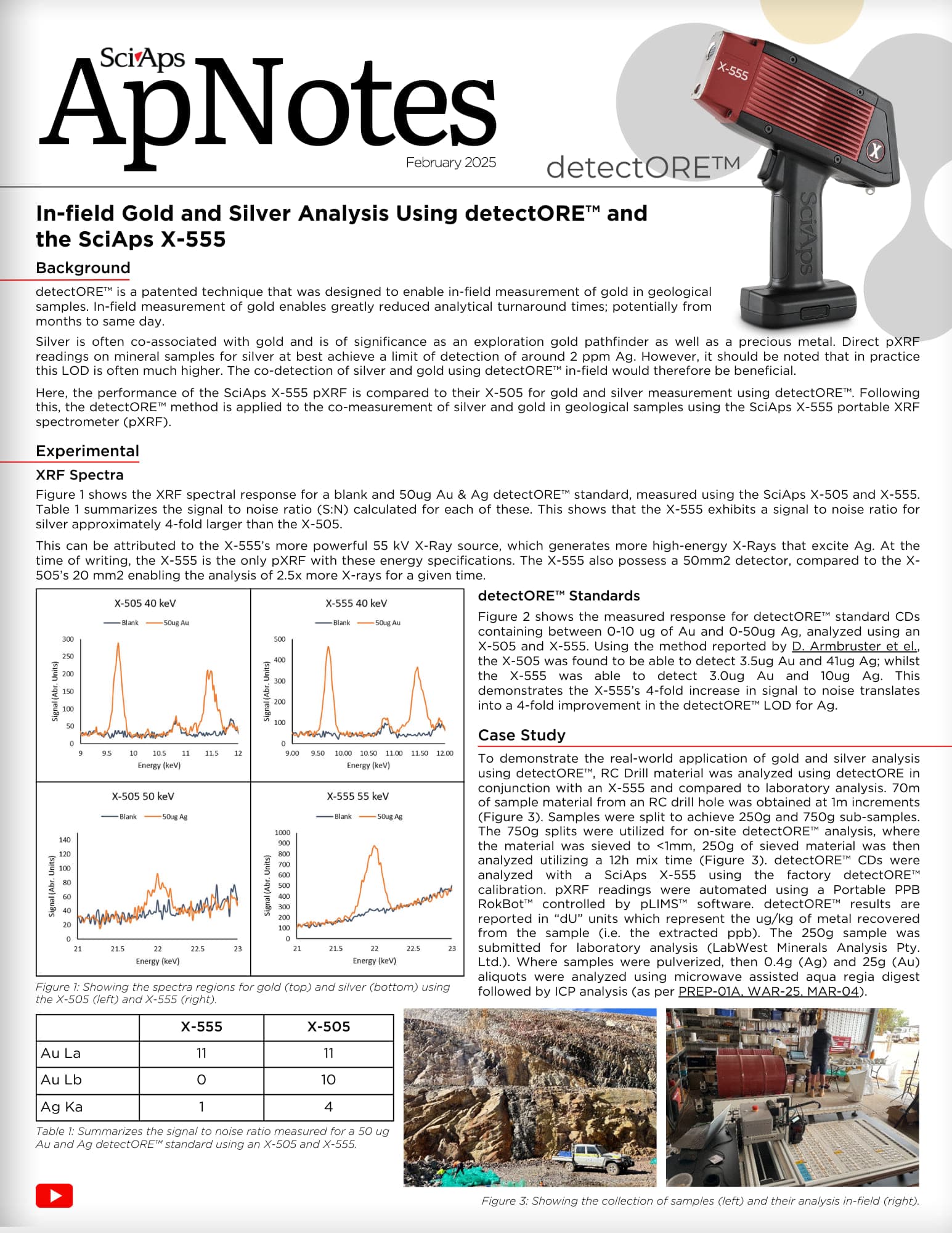
In-field Gold and Silver Analysis Using detectORETM and the SciAps X-555
Brochures
View all 13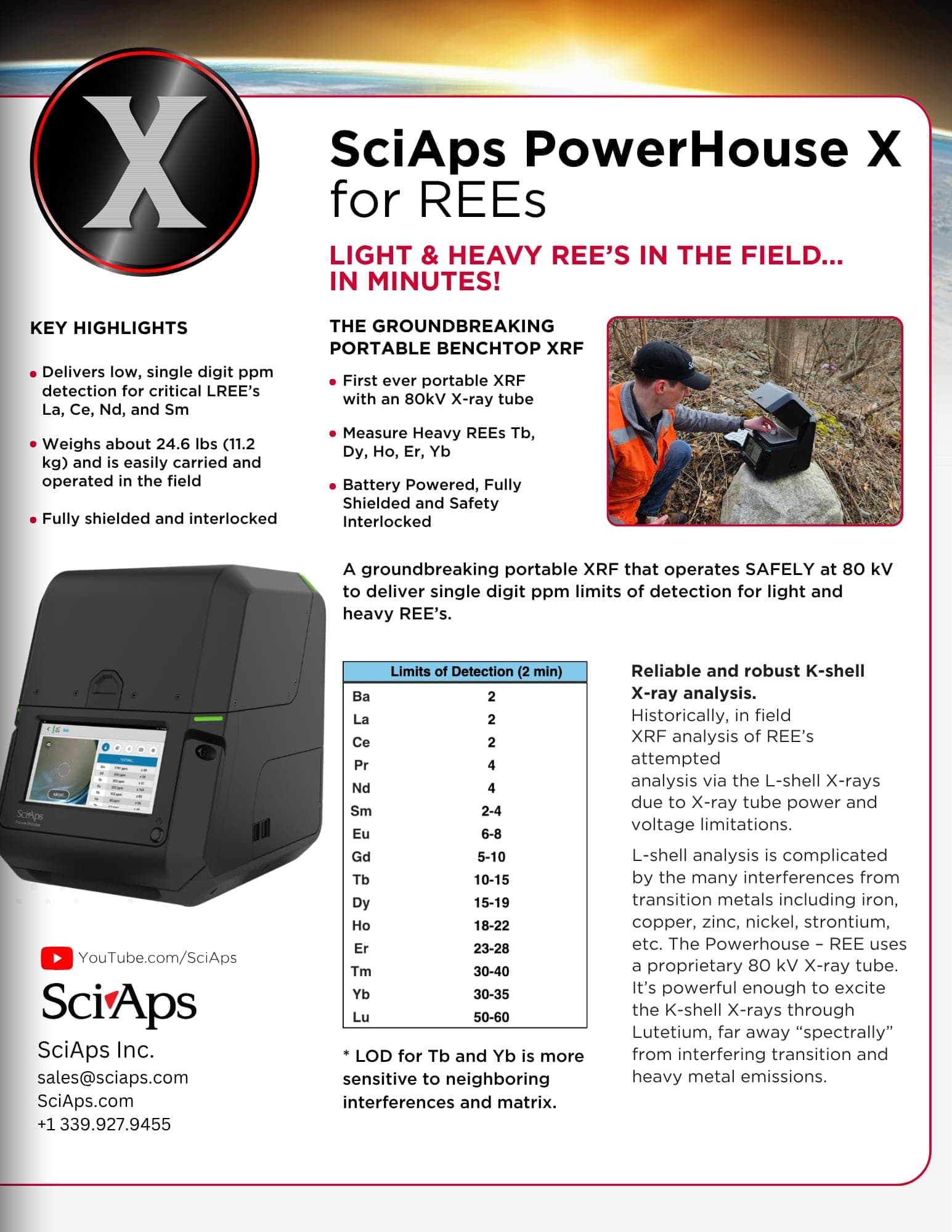
SciAps Portable PowerHouse for REEs brochure
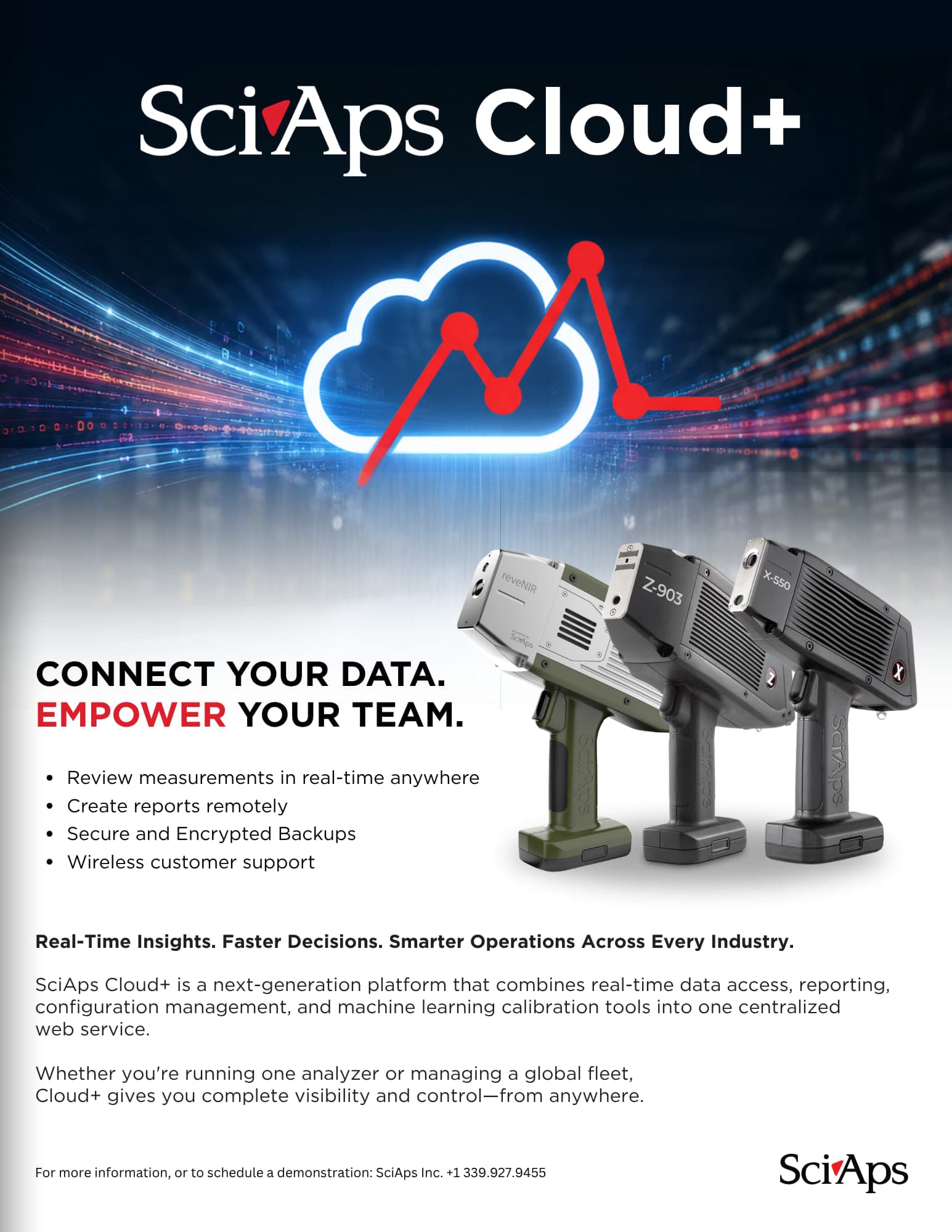
SciAps Cloud+ One Platform - Total Control
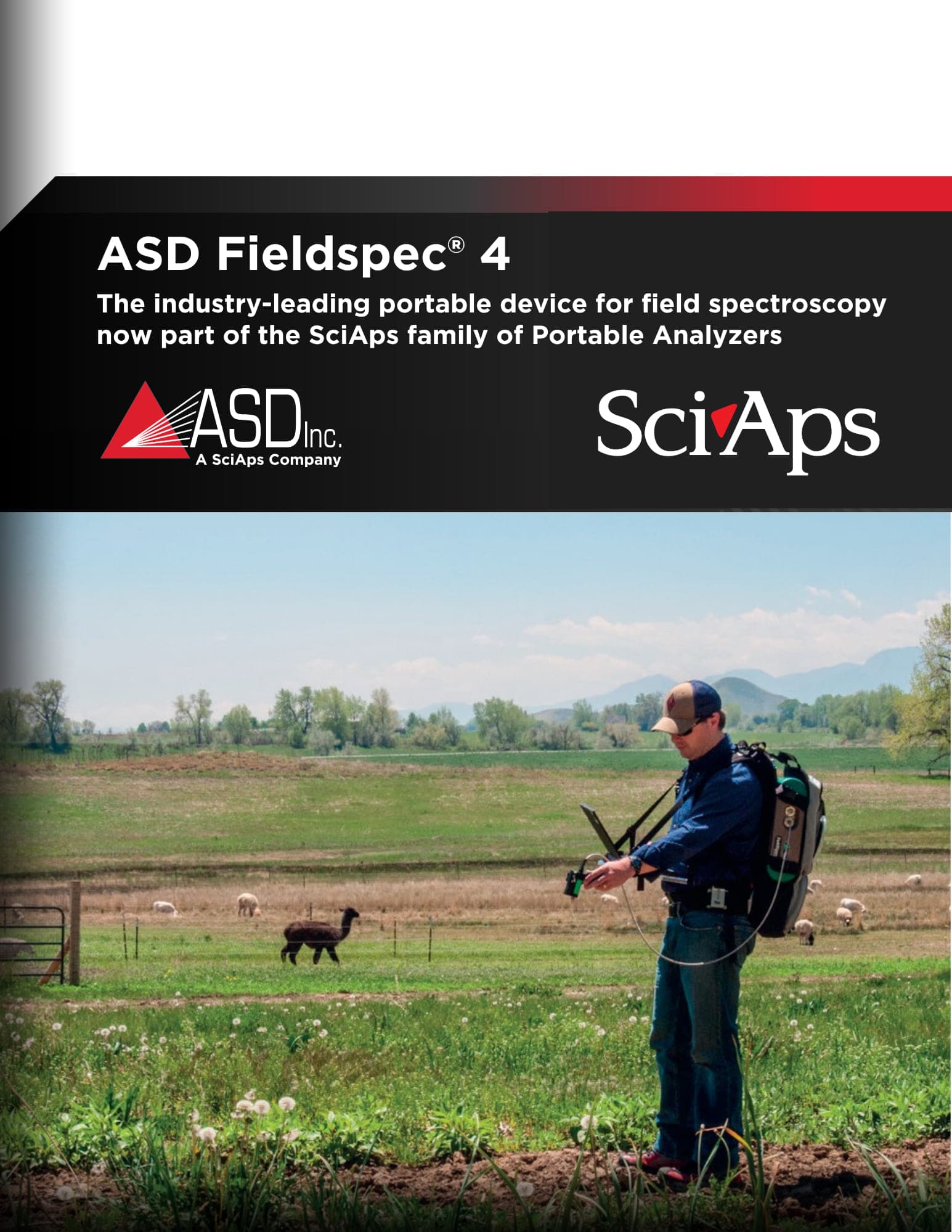
ASD FieldSpec 4 Brochure
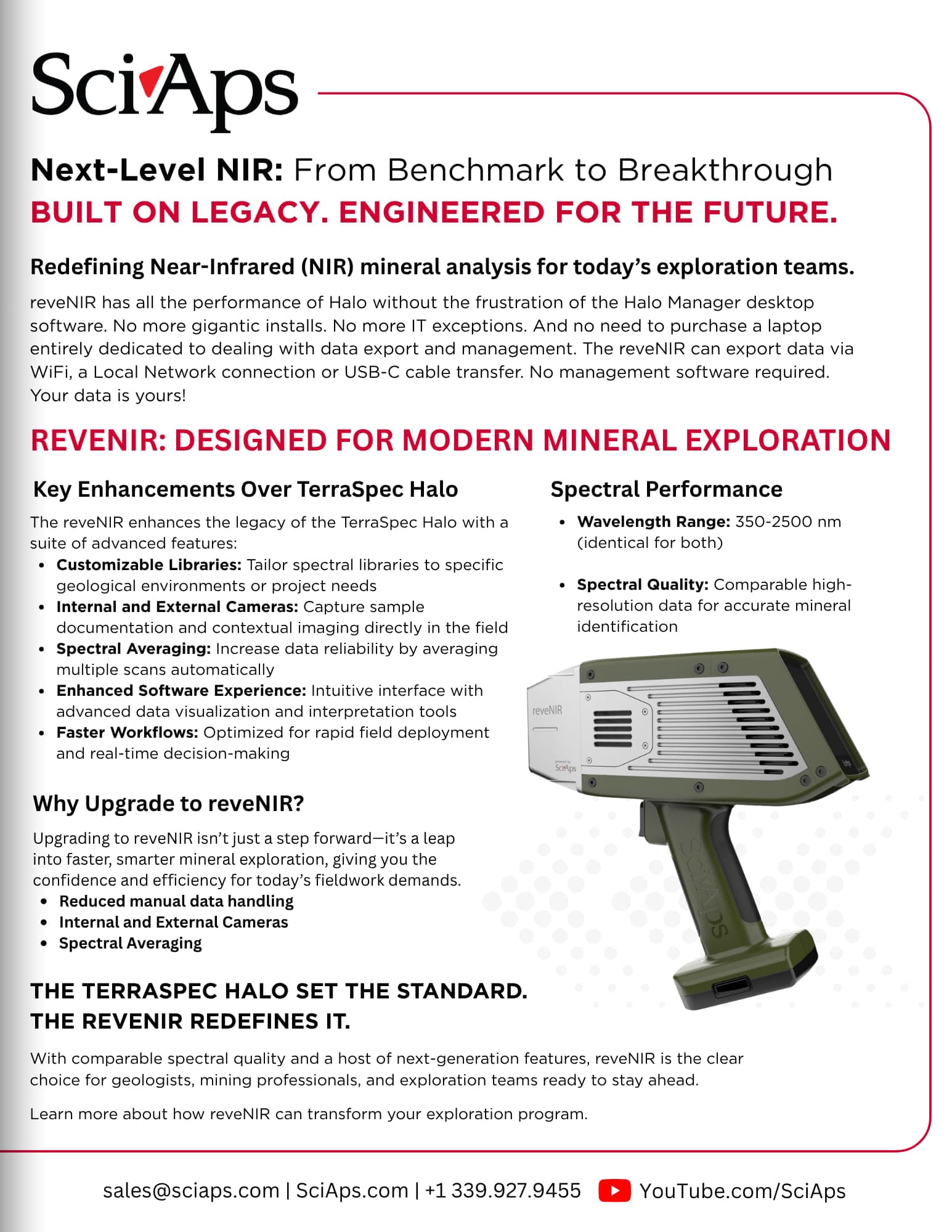
Next-Level Vis-NIR
Independent Studies
View all 11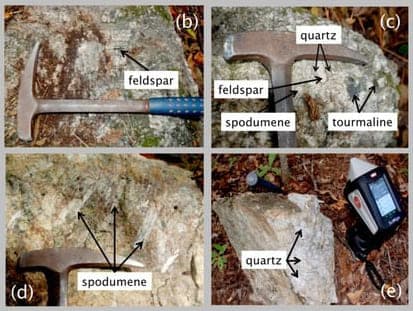
Handheld LIBS for Lithium Exploration: An Example from the Carolina Tin-Spodumene Belt, USA
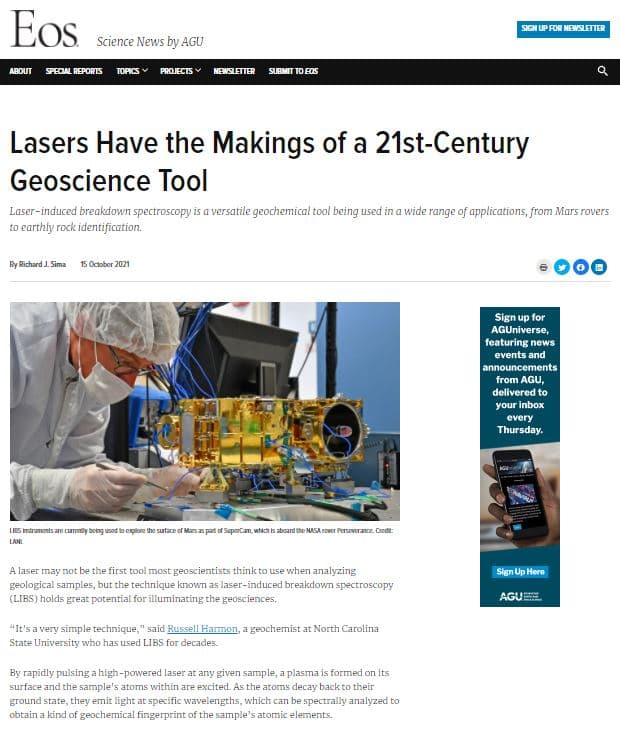
LIBS targeted for 21st-century geoscience
Lewis Owen of North Carolina State University is using the SciAps Z-300 handheld LIBS instrument to analyze rock varnish on granite boulders in the Alabama Hills of east central California. Credit: Harmon and Senesi, 2021.[/caption]In a recent AGU article, Richard Sima discusses the potential of LIBS for illuminating the geosciences. From the three instruments on the Mars rovers to the handheld LIBS used for fieldwork on Earth, Sima discusses the benefits and limitations of the versatile instrument.
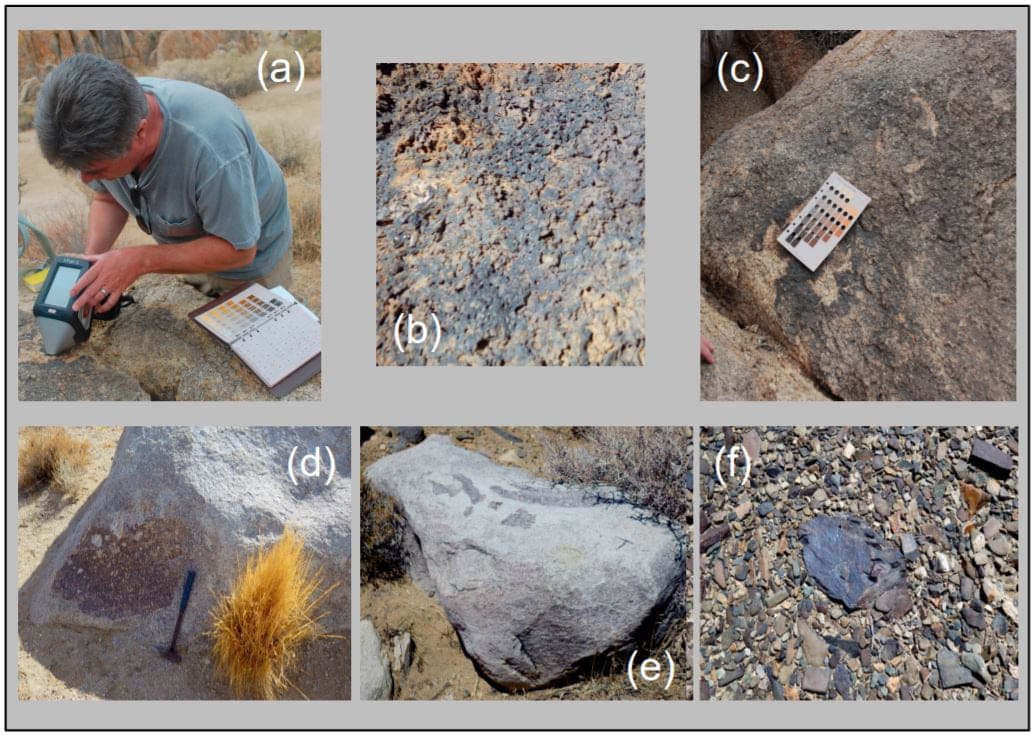
In-field analysis of rock varnish with SciAps LIBS
This study investigated the chemical composition of rock varnish using SciAps Z-300 handheld LIBS to determine LIBS utility for three applications: elemental detection and identification, micro-chemical mapping, and subsurface compositional profiling. In situ LIBS analysis of rock varnish and visually similar coatings on granite outcrops and boulders across the Mojave Desert climatic region recognized the most abundant elements in rock varnish – Mn, Fe, Si, Al, Na, K, Mg, Ca and Ba, along with the primary spectral lines for H, Li, Ti, V, Sr and Rb.
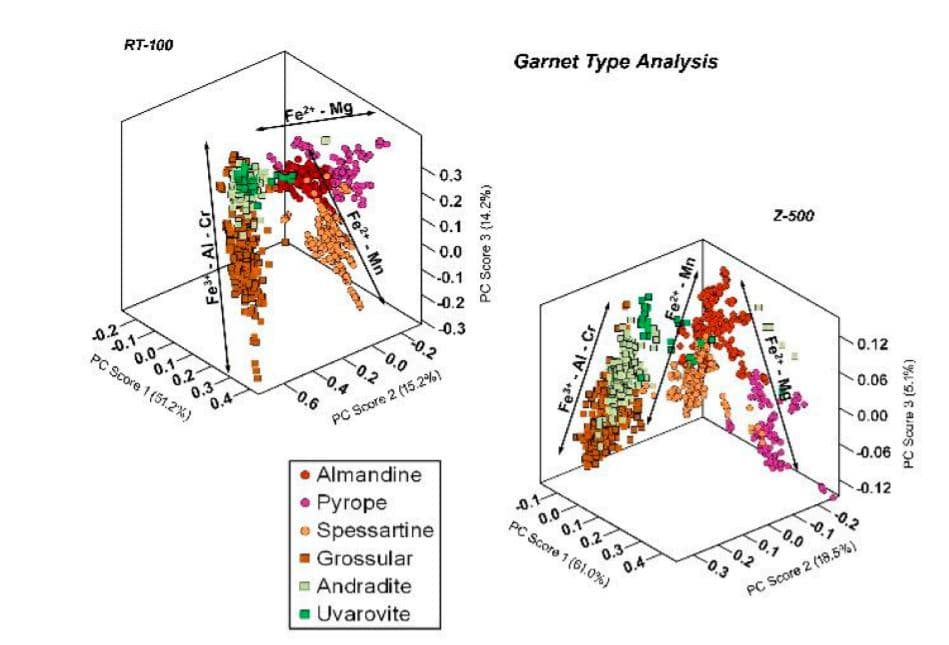
Analysis of garnet by LIBS – two practical applications
This study evaluated two practical applications of handheld LIBS using SciAps Z-300 – validation of labels assigned to garnets in museum collections, and discrimination of LCT (lithium-cesium-tantalum) and NYF (niobium, yttrium and fluorine) pegmatites based on garnet geochemical fingerprinting – both of which could be implemented on site in a museum or field setting with a handheld LIBS analyzer.
Frequently Asked Questions
Which handheld analyzer measures lithium in the field?
The SciAps Z-901 Lithium is the world's only handheld analyzer that measures lithium in rocks, ores, powders, and brines. For brine work needing additional elements (B, Na, Mg, Ca, K), the Z-902 extends the range, and the Z-9 Liquidator + Z-903 analyzes brines directly from 1–2 mL of sample.
How do you measure heavy rare earth elements in the field?
Handheld XRF tops out around 50–55 kV, which covers light REEs and the first heavy REEs (Eu, Gd, Y). For the heaviest REEs (Tb, Dy, Ho, Er, Yb, Lu), the portable-benchtop PowerHouse X runs an 80 kV tube to excite their K-shell lines and avoid spectral overlaps – reaching detection limits no handheld can.
What's the difference between XRF, LIBS, and Vis-NIR for exploration?
XRF and LIBS measure elemental composition (LIBS adds light elements like Li, Be, B, C that XRF can't), while Vis-NIR (ReveNIR, ASD) identifies minerals – the alteration and pathfinder minerals that vector toward ore. Used together, they give a complete elemental-plus-mineralogical picture in the field.
Can handheld XRF detect gold in exploration samples?
Standard portable XRF has limited gold and silver sensitivity, but the X-555 with detectORE™ reaches roughly 40 ppb gold and 0.4 ppm silver in the field – enabling potentially same-day gold-pathfinder decisions instead of waiting months for lab assays.