
July 15, 2026
Products
Services
Industries
About
Resources

How Do You Analyze a 600-Year-Old Artifact Without Damaging It? By using the SciAps X-200 handheld XRF analyzer for completely non-destructive elemental analysis.
The Study: "Technical Analysis of Ironmaking in Benxi Region During the Ming Dynasty” in Processes Journal
Researchers investigated the Wangguan ironmaking site in Benxi, northeastern China, to reconstruct how iron was produced during the Ming Dynasty (1368–1644). Their goal was to combine archaeological evidence with modern analytical techniques to better understand one of China's most important historic iron-producing regions.
The team analyzed:
Together, these materials allowed researchers to piece together an entire ironmaking process that had been used hundreds of years ago.

Historical records suggested Benxi supplied significant amounts of iron during the Ming Dynasty.
The archaeological evidence confirmed that Wangguan was likely the location of the historic Hundred-Household Iron Yard, an important government-operated ironmaking center.
Analysis showed the crucibles were made from locally sourced high-alumina clay.
The composition produced:
This demonstrated that Ming Dynasty craftsmen possessed sophisticated knowledge of refractory materials.
One of the paper's most interesting conclusions is that workers in the Benxi region had already mastered using coal resources and coke during the Ming Dynasty.
The researchers concluded these iron makers understood how fuel selection influenced sulfur content and pig iron quality—much earlier than many people might expect.
Unlike slag or crucible fragments, the excavated iron agricultural tools are museum artifacts.
Researchers couldn't cut them apart or remove samples for laboratory analysis.
Instead, they used the SciAps X-200 handheld XRF analyzer for completely non-destructive elemental analysis.

According to the paper, the X-200 was used to determine the elemental composition of the artifacts, including iron, silicon, aluminum, phosphorus, sulfur, titanium, and other elements while leaving the objects intact. The analyzer's broad measurement range and high analytical precision allowed the team to characterize the composition of centuries-old tools without causing any damage.
That information helped researchers:
SciAps handheld XRF allowed researchers to obtain scientific data while preserving cultural heritage for future generations.
Zhao, D.; Jiang, M. “Technical Analysis of Ironmaking in Benxi Region During the Ming Dynasty.” Processes 2025, 13,3016.
“To prevent the Ming Dynasty iron agricultural tools from being damaged or destroyed, non-destructive composition detection was carried out on these cultural relics using the American SciAps handheld XRF mineral element analyzer, model X-200 (SciAps, Inc., Boston, MA, USA).. The detection range was from 0.01% to 99.9%, and the detection accuracy was 0.001%.”
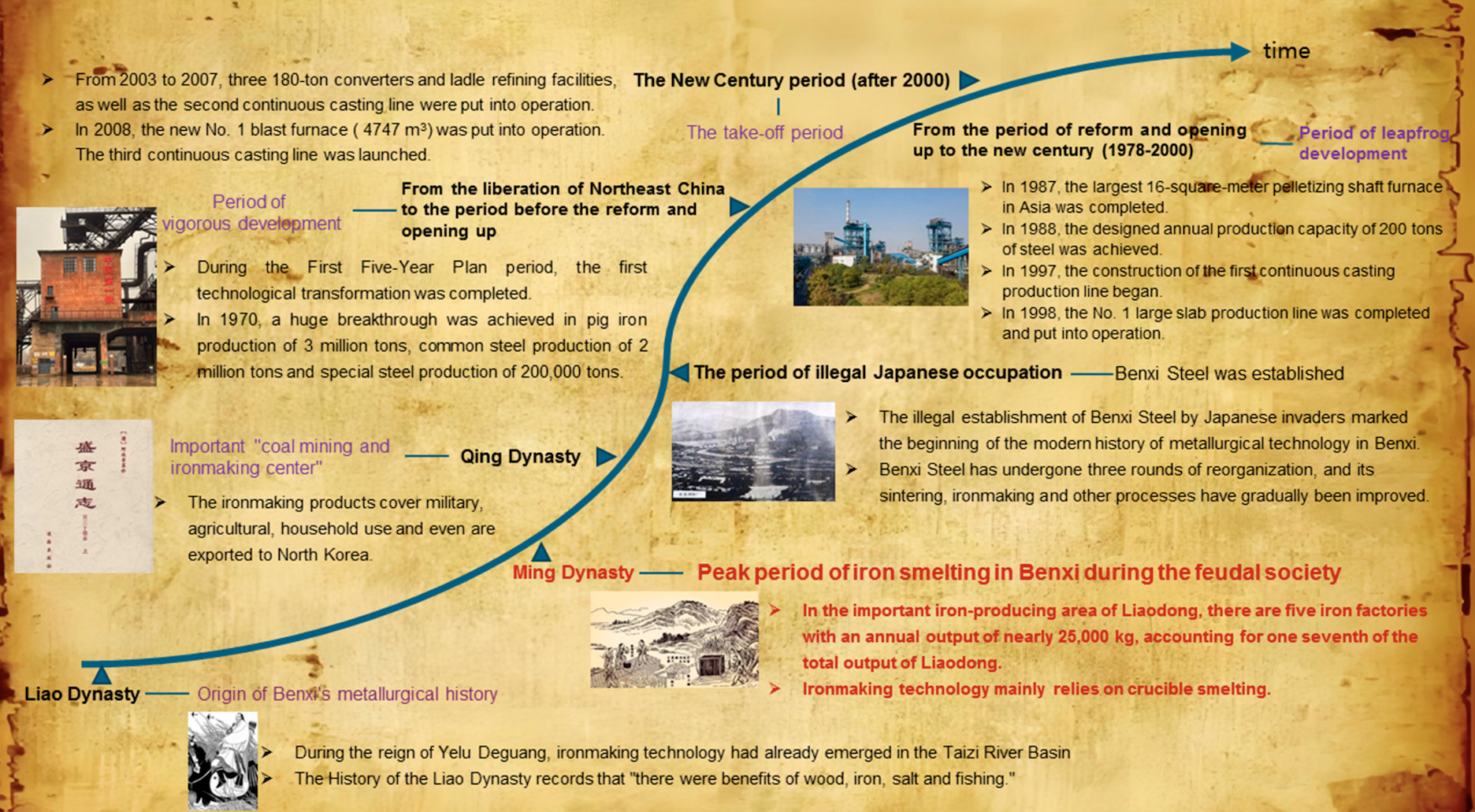
During the development of metallurgical technology in the feudal period, the main ironmaking technology in the Benxi region was the crucible, reaching its peak period in the Ming Dynasty. By studying the Wangguan ironmaking site in Benxi, the historical details of the Ming Dynasty ironmaking process in the region were investigated, and a technical analysis was carried out. The results show that this historical site was the location of the Hundred-Household Iron Yard in the northeastern region during the Ming Dynasty. The unearthed slag, iron, and crucible samples indicate that a relatively complete ironmaking process chain had been formed at this time. The raw material used for the crucibles was high-alumina clay, which has been widely distributed in Benxi, Liaoning, China, since ancient times. The refractoriness of the crucibles exceeded 1700 ◦C, and the molar ratio of SiO2 to Al2O3 was close to the upper limit for the optimal formation of mullite and thermal shock resistance. Slag was produced from a typical high-silica, high-alumina aluminosilicate system, and no fluxes, such as limestone and dolomite, were added during the smelting process. Moreover, coal resources have been widely used in ironmaking activities in the Benxi region at least since the Ming Dynasty, and craftsmen at that time had already mastered the technology of using coke as fuel and reductant to control the sulfur content in pig iron.
history of ironmaking; metallurgical principles; technical analysis; Benxi region; iron and steel industry
https://doi.org/10.3390/pr13093016
Processes is an international, peer-reviewed, open access journal on processes/systems in chemistry, biology, material, energy, environment, food, pharmaceutical, manufacturing, automation control, catalysis, separation, particle and allied engineering fields published semimonthly online by MDPI.


