
January 14, 2026
Products
Services
Industries
About
Resources
By Don Sackett, Co-Founder, SciAps
When it comes to scrap metal sorting, few decisions have a bigger impact on accuracy, throughput, and profitability than choosing the right analyzer. At SciAps, scrap metal recycling is one of our favorite markets—and if you’ve ever caught us at a ReMA show, you know we genuinely love spending time with recyclers in the field.
One of the most common questions we hear—from customers and sales teams alike—is simple but important:
“Which analyzer should I get?”
The real answer depends on what you’re sorting, how precise you need to be, and how fast you need to work. To make that decision easier, let’s break down the three SciAps XRF options—entry-level, mid-range, and premium—and explain where each one shines, where limitations come into play, and how some scrapyards mix and match for maximum efficiency.
The X-50 is our entry-level XRF, and for many scrapyards, it’s more than enough.
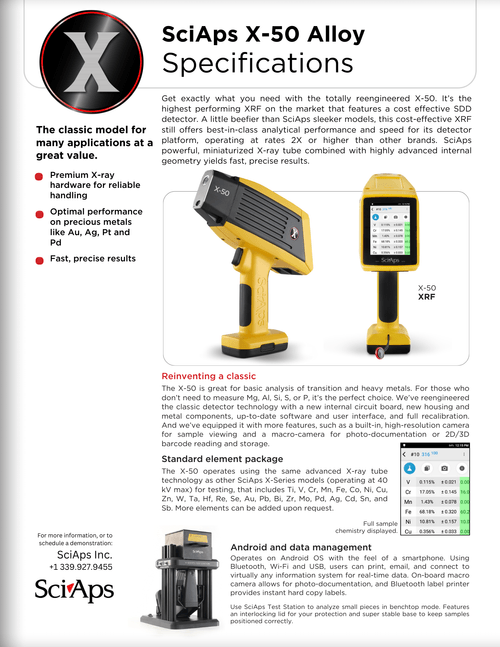
What it does well
What it doesn’t measure
The X-50 does not measure:
Because of this, the analyzer assumes the alloy being tested is the most common version in that family.
Where mix-ups can happen
Bottom line:
If you’re sorting mostly common alloys and understand the limitations, the X-50 is a powerful, cost-effective tool that handles the majority of scrap accurately.
The X-200 steps things up by measuring the light elements the X-50 can’t.
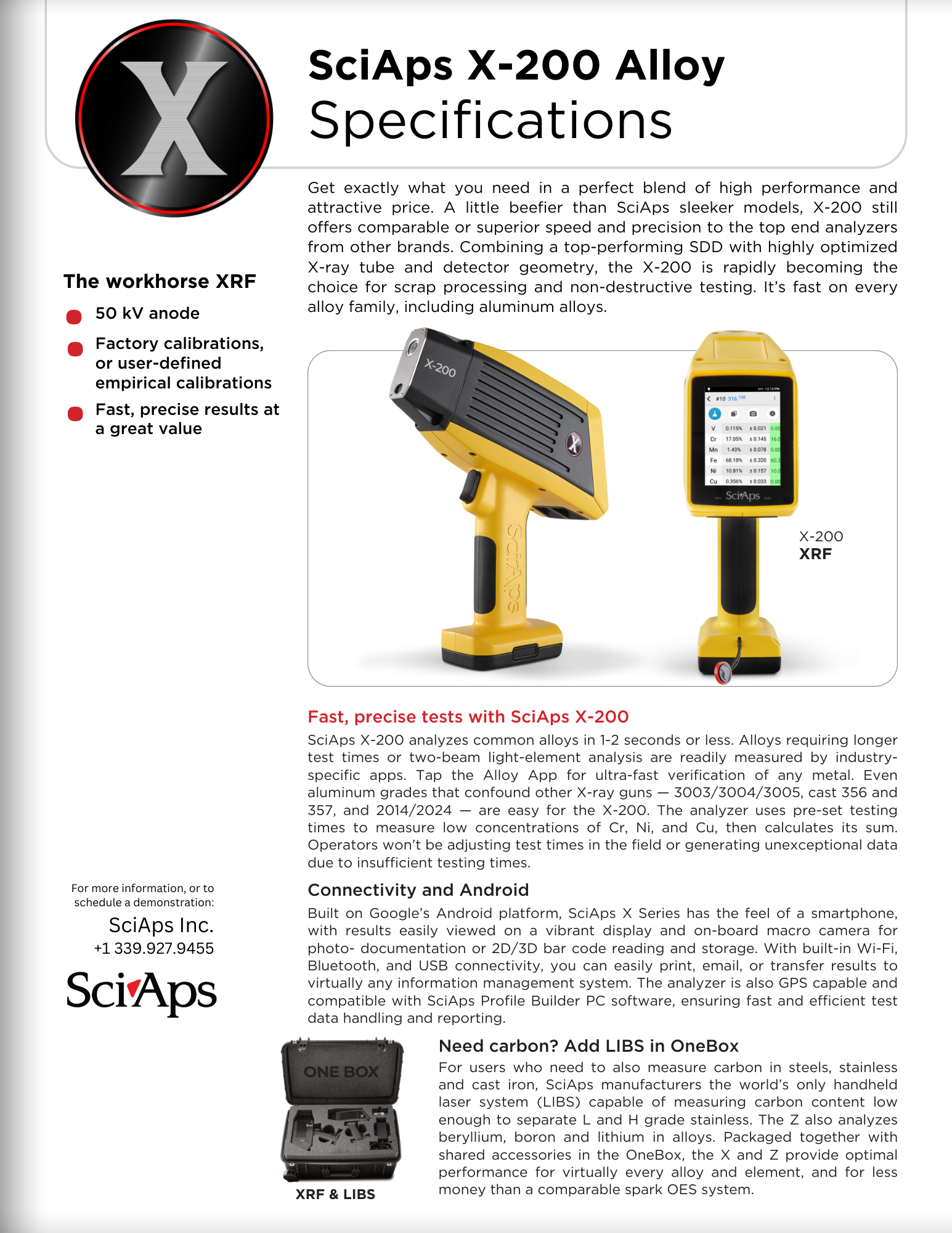
Additional elements measured
This expanded chemistry eliminates nearly all of the alloy mix-ups we just discussed.
Why that matters
The X-200 uses two-beam analysis, allowing it to measure these light elements quickly—usually in just a couple of seconds.
One small limitation
In rare cases, aluminum alloys with high silicon and very low magnesium (like 356) may take a bit longer—around 7–8 seconds—to fully resolve. That’s still faster than most competing XRFs, and for the vast majority of recyclers, it’s a non-issue.
Bottom line:
The X-200 is the “safe choice.” If you want high confidence alloy sorting without jumping to the premium price tier, this analyzer delivers excellent accuracy and peace of mind.
The X-550 is our most popular model—and for good reason.
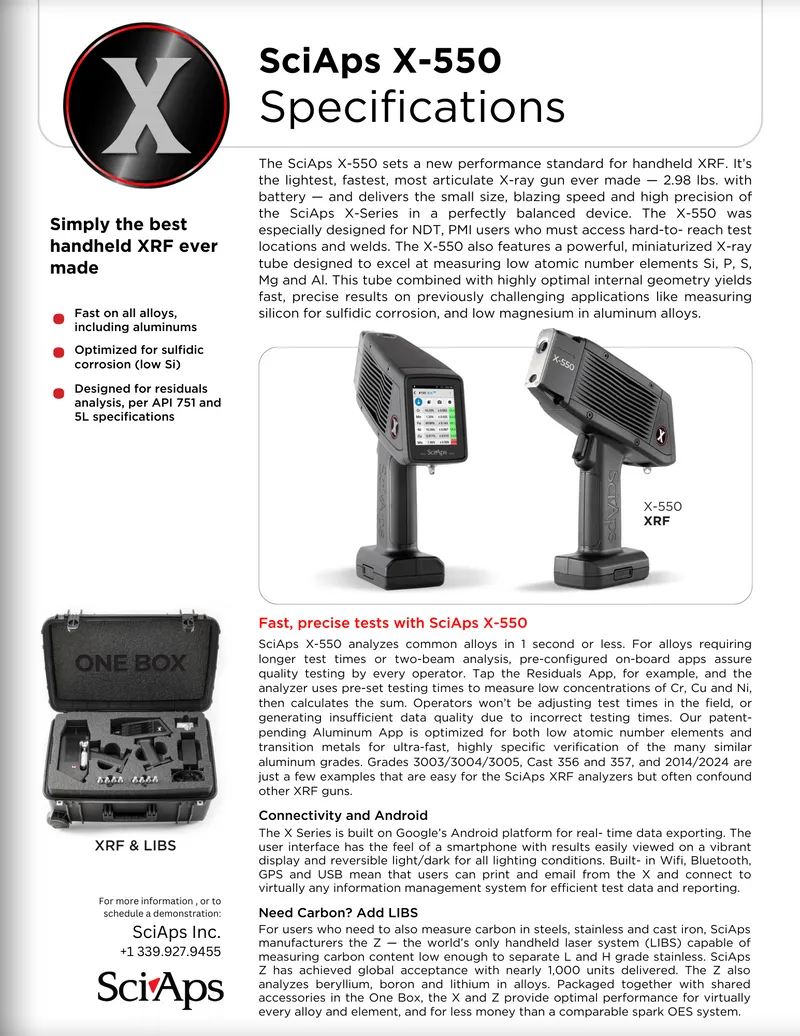
Why recyclers love it
Where the X-550 really shines
The X-550 includes intelligent alerts for problematic materials:
These warnings help prevent costly contamination errors—especially when operators are sorting by grade rather than chemistry.
This dedicated aluminum sorting app identifies nearly all aluminum alloys in about one second, including:
If speed matters—and in scrap, it usually does—this feature alone makes the X-550 stand out.
Bottom line:
If aluminum is a major part of your business and you want maximum speed, accuracy, and operator confidence, the X-550 is hard to beat.
Many scrapyards don’t choose just one model.
A common setup:
Basic scrap gets sorted quickly, and anything questionable is sent to the premium analyzer. This approach maximizes ROI while keeping throughput high.
We’re often asked:
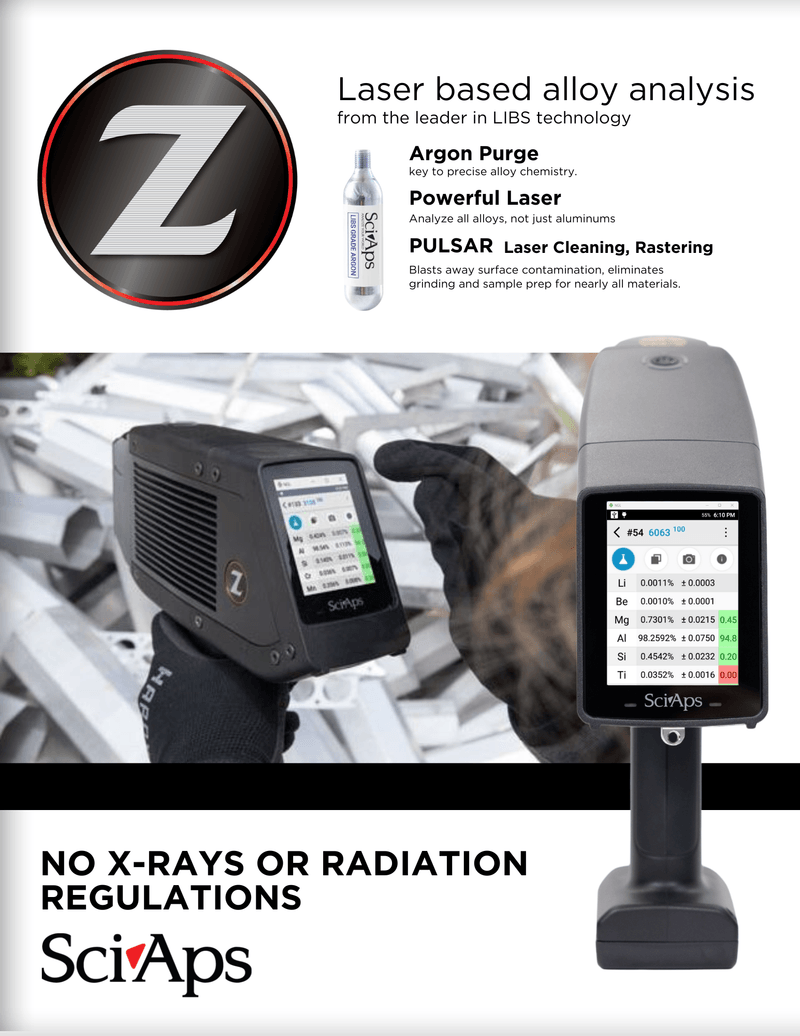
“If your XRFs are so good at aluminum, where does LIBS fit?”
That said, XRF is generally easier to use, faster to train on, and more forgiving with small or oddly shaped scrap. For most scrapyards, XRF remains the go-to tool—while LIBS fills a specialized role.
There’s no one-size-fits-all analyzer—but there is a right analyzer for your scrapyard.
At SciAps, we believe recyclers shouldn’t pay for performance they don’t need—but when you do need it, you should have the best-performing system available.
And that’s exactly why we offer all three.


